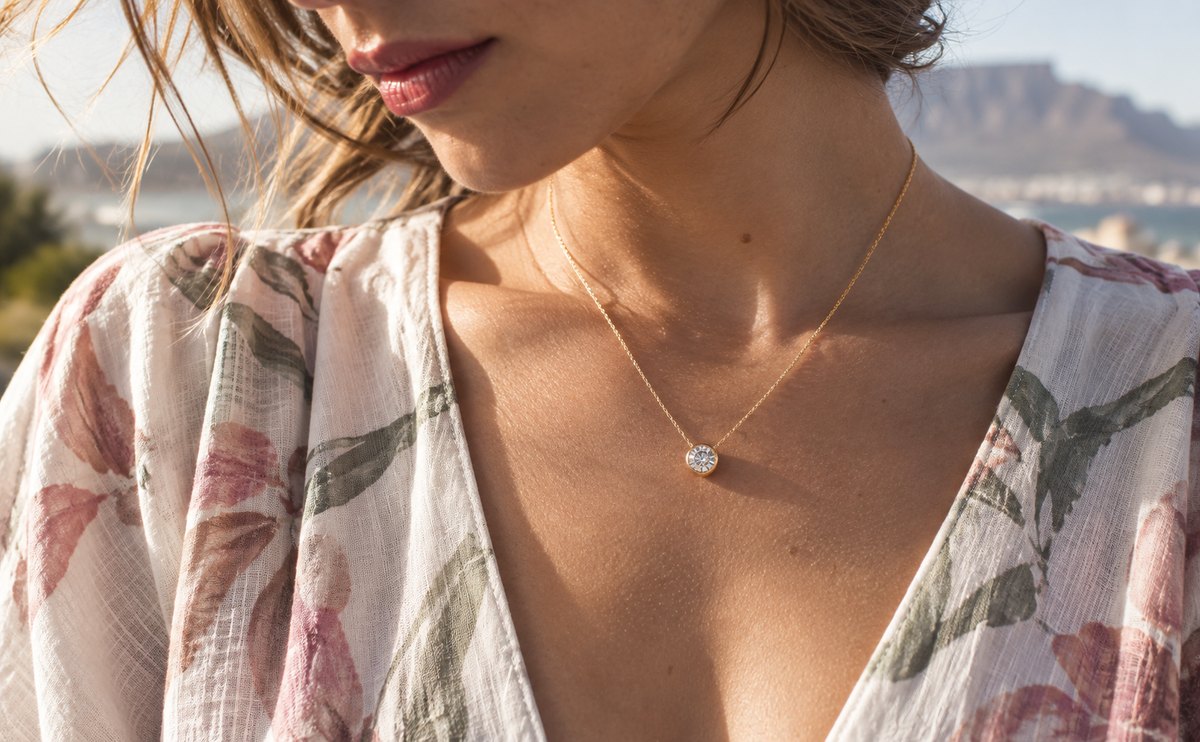
Chain length is another detail worth getting right. A 40 cm chain sits at the collarbone and suits a pendant you want to wear close to the neckline. A 45 cm chain falls just below the collarbone, which is the easiest length to wear every day. A 50 cm chain rests at the top of the chest and works well for larger, bolder pendants. A line necklace is usually worn at 40 or 42 cm for a snug, classic fit. If you are not sure, 45 cm is almost always the right choice.
Studio Bench
Cape Town
Setting Stones
Cape Town

Diamonds have been valued for thousands of years, but the way we judge them today comes from a very precise science. Since the middle of the last century, gemmologists have used one shared framework, known everywhere as the Four Cs, to describe the quality of any stone. Learning these four points will not make you an expert overnight, but it will give you the words and the confidence to ask good questions, compare stones fairly, and walk out with a piece you are happy to own.
Understanding the Four Cs
The Four Cs are Cut, Colour, Clarity and Carat weight. Each plays its own part in how a diamond looks and what it will cost you.
- Often the most important of the four, cut is not the shape of the stone but how well its facets work with light. A well cut diamond looks alive from across a room. A badly cut one looks flat no matter how good the rest of it is. Cut grades run from Excellent down to Poor.
- Diamond colour is graded from D, completely colourless, down to Z, which is clearly yellow or brown. In a white gold or platinum setting, stones in the D to G range look white to the naked eye. In a yellow gold setting, a warmer stone in the H to J range looks just as good and costs less.
- Clarity is about marks inside the stone and on its surface. The scale runs from Flawless down to Included at the bottom. For a pendant worn at the chest, a stone graded VS2 or SI1 looks clean to the eye, meaning no marks show without a loupe. That is where the value sits.
- Carat is simply weight, and one carat is 0.2 grams. Bigger stones are rarer, so they cost more per carat. Weight on its own does not make a stone beautiful. A smaller, well cut diamond will out-sparkle a larger, badly cut one every time.
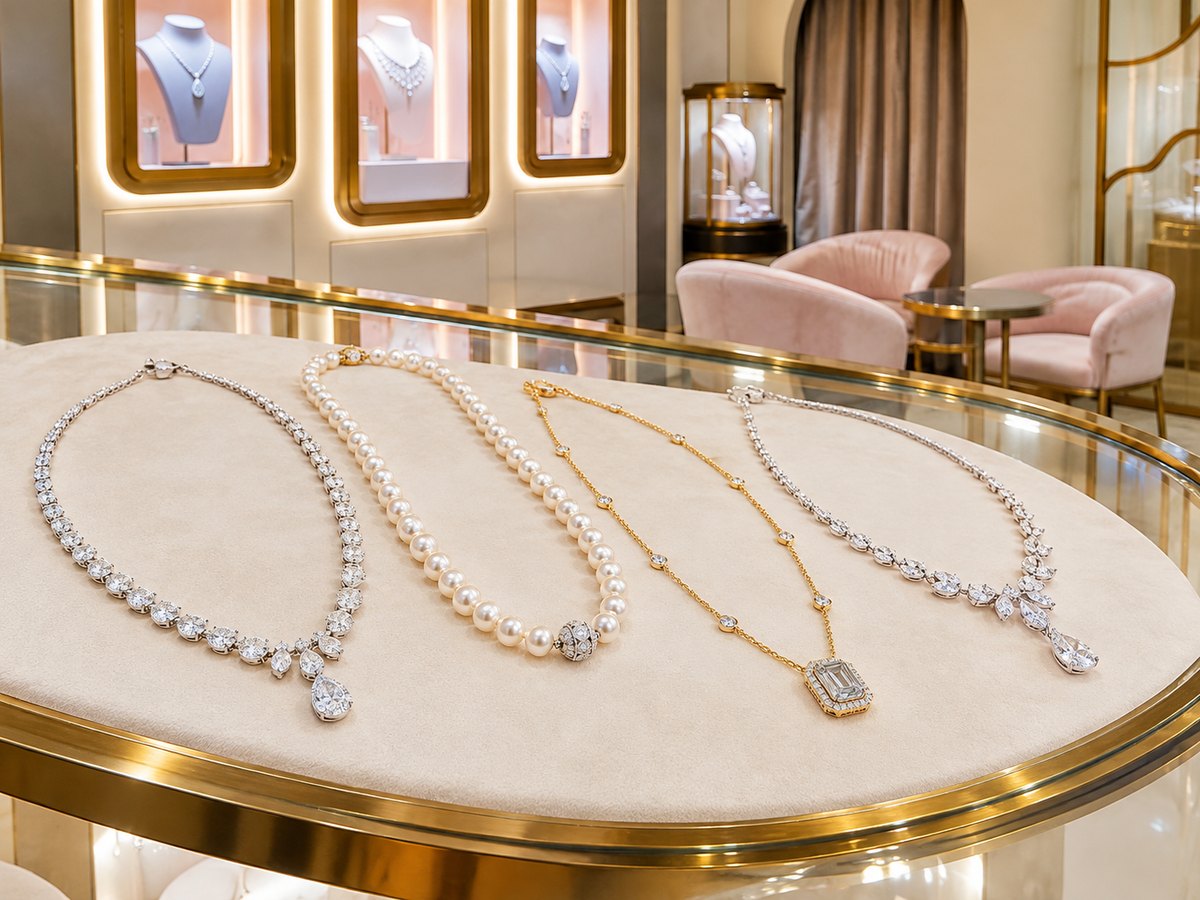
Once you have the Four Cs straight, the next question is style. Diamond necklaces cover a wide range of designs, and knowing the main shapes will help you match the piece to the job it has to do, and to the person who is going to wear it.
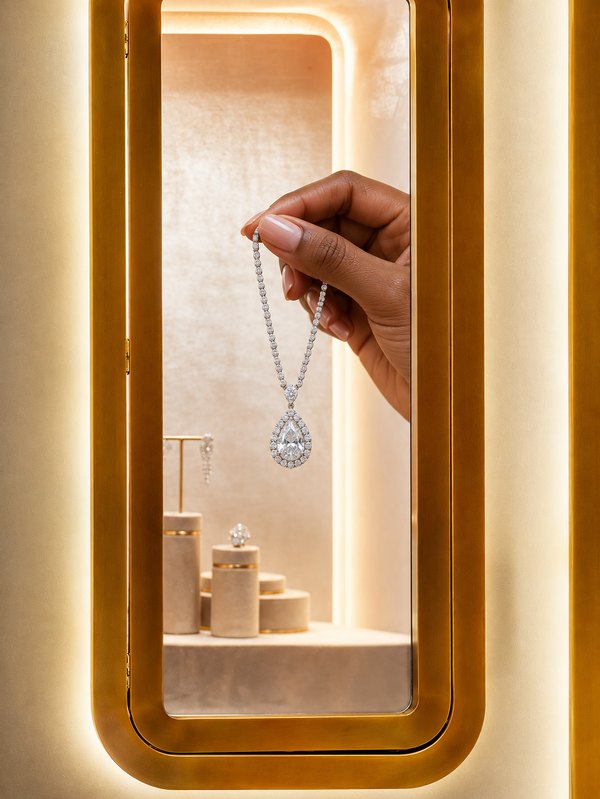
A solitaire pendant is still the most popular choice by a long way. One stone, round, oval or pear shaped, hanging from a fine chain, goes with jeans on a Saturday and with a long dress at a wedding. That makes it a safe pick when you are buying for someone else. A halo pendant puts a ring of small stones around a bigger one, which makes the centre look larger and adds a lot of sparkle for the money. If you want something properly grand, a line necklace, which is a run of matched stones all the way round the neck, is the top of the range. It needs nothing else worn with it.
Thanks for reading this far. We will have more guides for you soon, so check back.