
Blog
When to replace your brake pads
Brake pads wear down every time you squeeze the lever, and how fast depends on your riding and the roads you use. Stop start traffic eats through pads quicker than open road riding. Thin pads mean a longer lever pull and less stopping power right when you need it most. Catching wear early is cheap. Ignoring it is not.
Habitant leo
Most riders only think about brake pads when the bike starts squealing or the lever feels soft. By then the pads are already thin and the disc is working harder than it should.
We check pad thickness every time a bike comes in for a service. If there is less than two millimetres of material left, we replace the pad before it reaches the backing plate and starts scoring the disc.
A squeal under braking is usually the wear indicator doing its job, warning you before metal touches metal. Grinding or a scraping sound is a different story. That means the pad is gone and the disc is now paying the price.
Keep an eye on lever travel too. If you find yourself pulling the lever further than usual to get the same stopping power, that is often the first sign your pads need a look before the warning sounds even start.
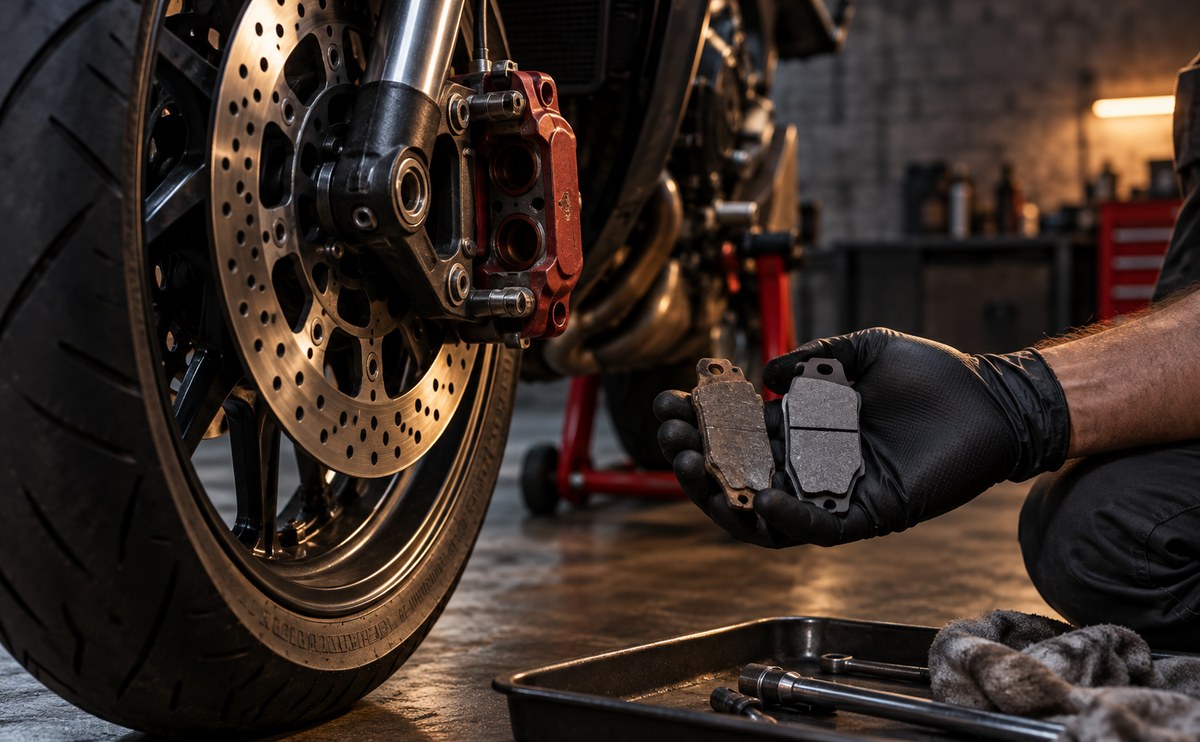
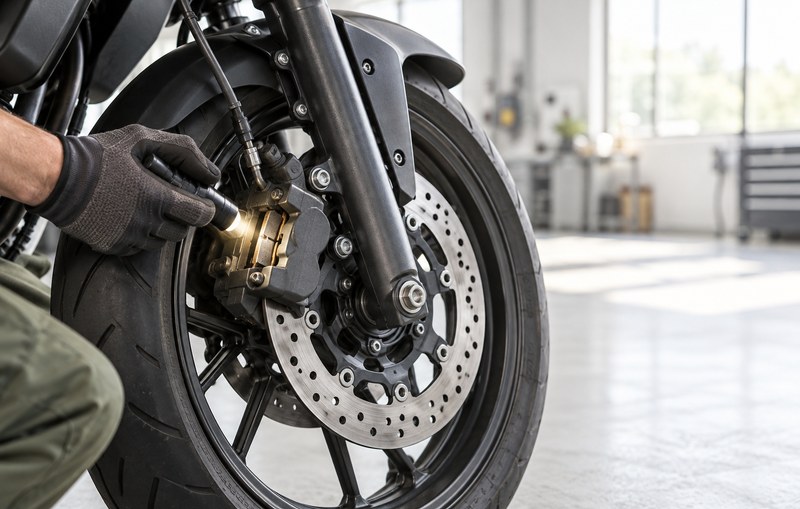
You do not need to strip the bike down to check your pads. On most bikes you can see the pad material through the caliper window, and a torch helps if the light is bad.
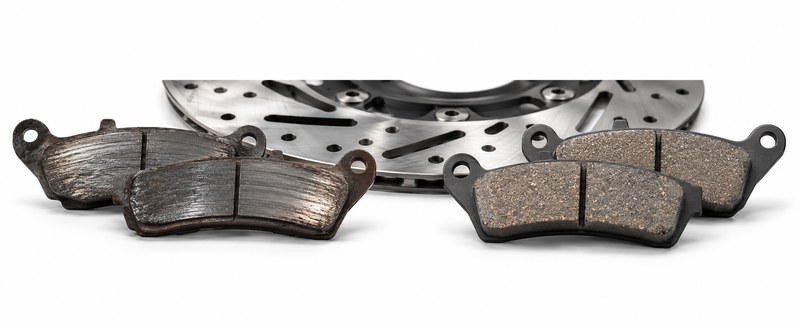
If the friction material looks level with or thinner than the metal backing plate, it is time for new pads.
We also check the disc surface and the caliper slide pins whenever we fit new pads, since a sticking caliper is what wears pads unevenly in the first place.
Front and rear pads rarely wear at the same rate. The front brake does most of the work on a bike, so front pads usually need replacing more often than the rear set.
Loaded touring, a pillion on board or a lot of hill work wears pads faster on both ends. If that sounds like your riding, check your pads a bit more often than the service schedule suggests.
Checking Pads
Your brake pads wear down a little every time you ride. Most riders get 10,000 to 20,000 kilometres from a set, but hard braking in traffic wears them faster.
Listen for a high pitched squeal or grinding sound when you brake. Both mean it is time to check the pads.
If you are not sure, bring the bike in and we will check the thickness for you.
Pad life depends on the compound fitted as much as on how you ride. A softer pad bites harder and wears faster, while a harder compound lasts longer but takes a moment longer to bite in cold weather.
We stock pads to suit everything from daily commuters to weekend Karoo runs, and we can tell you which compound suits your bike and your riding before you buy.