Blog
How to Choose the Right Rug Size
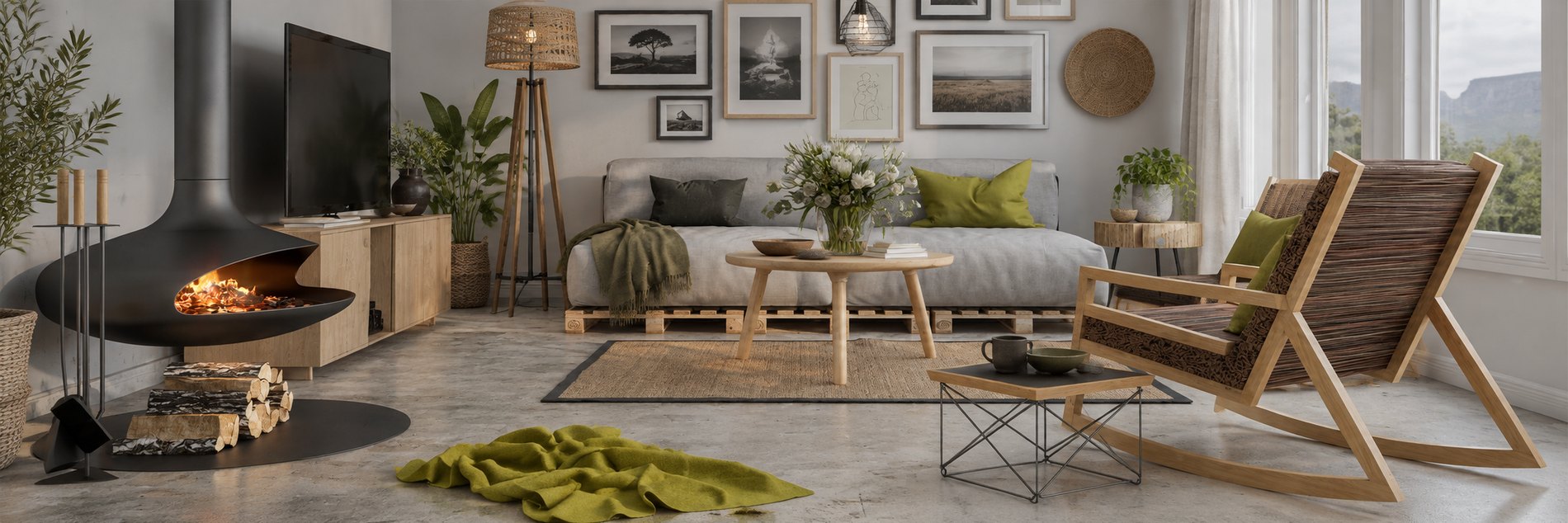
A rug can make a room feel finished or make it look oddly unfinished, and the difference usually comes down to size. The most common mistake is a rug that is too small. It floats in the middle of the lounge like a bath mat, with the couch and chairs stranded around it. A rug that is too big is rarer, but it happens in older homes where fireplaces break up the floor. The good news is that a few simple rules work in almost every room. Get the size right first, then think about colour and texture. A beautiful rug in the wrong size will always look wrong, however much you paid for it, and you walk over it daily.
Living Rooms
In a living room, the rug should connect the furniture, not sit in front of it. The easiest rule is to have at least the front legs of the couch and every chair resting on the rug. That ties the seating together into one group. For most South African lounges with a three-seater and two chairs, a rug of 200 by 300 cm works well, and 160 by 230 cm is the smallest that usually looks right.
Leave a strip of bare floor of about 30 to 45 cm between the edge of the rug and the walls. That border frames the rug and stops the room looking carpeted. In an open-plan space, use the rug to mark out the lounge so it feels separate from the dining area.
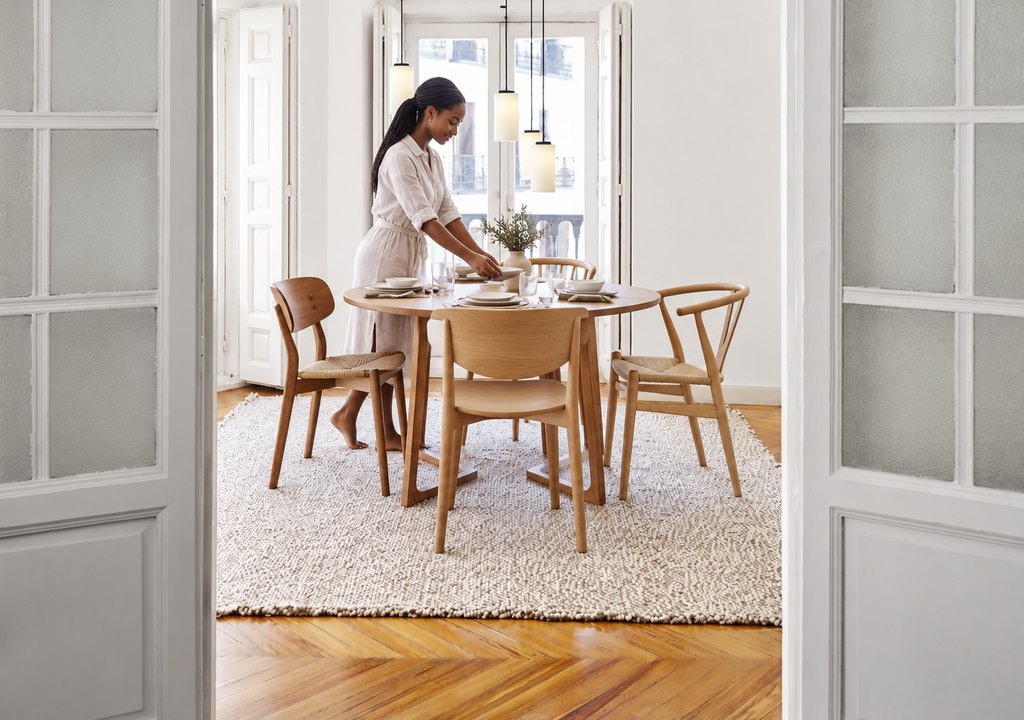
Dining rooms follow a different rule. The rug must be big enough that the chairs stay on it when someone pushes back to stand up. Measure your table, then add at least 60 cm on every side. For a table of 200 by 100 cm, that means a rug of roughly 320 by 220 cm. Anything smaller and the back chair legs keep catching on the edge, which is annoying and wears the rug out fast.
Pick a low, flat weave under a dining table. Thick shaggy rugs trap crumbs and make chairs hard to slide. A flatweave or a short cotton pile is easier to clean after a braai, and a spill of tomato sauce or red wine comes out with far less effort.
Bedrooms are where people most often buy too small. A rug under a queen bed should stick out 50 cm on each side, so your feet land somewhere soft on a cold Highveld morning. That usually means 200 by 300 cm.
If the rug only covers the space between the bed and the wardrobe, it will look lost. Let it run under the bed and out the sides instead.
If a big rug is not in the budget, two runners on either side of the bed work almost as well. They give warm feet in the morning and cost much less than one large rug.
Passages and entrances are easier. A runner should leave about 10 to 15 cm of bare floor on each side and stop short of doors so they swing freely. In a long Joburg passage, one runner looks calmer than two short ones. Always use non-slip underlay on tiles.
Speaking of underlay, do not skip it. A rubber or felt underlay stops the rug creeping across polished floors, protects wooden floors from scratches and adds comfort underfoot. It helps the rug last longer, because the fibres are not ground against a hard surface with every step. On heated floors, check the underlay is rated for heat.
Quick Checks
Before you buy, mark the rug size on the floor with masking tape. Leave it for a day or two. Walk around it, pull the chairs in and out, and open every door that swings over the area. You will soon know whether it works.
Also check the colour in your own light. A grey that looks soft in a showroom can look cold in a south-facing Cape Town lounge, and terracotta can look very orange in Durban sun. Ask for a sample or take photos at home. Natural fibres like wool, jute and cotton age well, while cheap synthetics flatten and fade in strong sun.
When in doubt, go bigger. A rug slightly too large almost always looks better than one too small.
Finally, think about how you live. Homes with dogs, small children or a steady stream of people coming in from the garden need rugs that can take a beating and be cleaned easily. Darker colours and patterned designs hide the odd muddy paw print. A lighter plain rug looks lovely but may need professional cleaning every year, which adds up. Be honest about your household before you fall in love with a cream wool rug.
At Furniture, customers often bring in a sketch of their lounge with measurements scribbled in the margins, and we sit down together to work out a rug size before looking at colour. It is a small step, but it saves many returns and, more importantly, it saves people from living with the wrong rug for years.